
Maricopa County Court Docket Searches
Know the court before you search. The Maricopa Superior Court Docket handles civil, criminal, family, and probate case information. It serves the Superior Court of Arizona in Maricopa County. Not everything belongs there. A county traffic ticket, eviction, small claim, or misdemeanor may sit in a Justice Court instead. City police citations and city-code charges usually stay with that city's Municipal Court. A notice often names a court, a case prefix, or an issuing agency. Those clues beat a party's home address every time.
Search with a full case number when you have one. Name searches work in a pinch. But the spelling, court level, filing year, and party role all have to line up. Two people sharing a name is not evidence they share a record. For general-jurisdiction departments and services, the Superior Court of Arizona in Maricopa County is the official starting point.
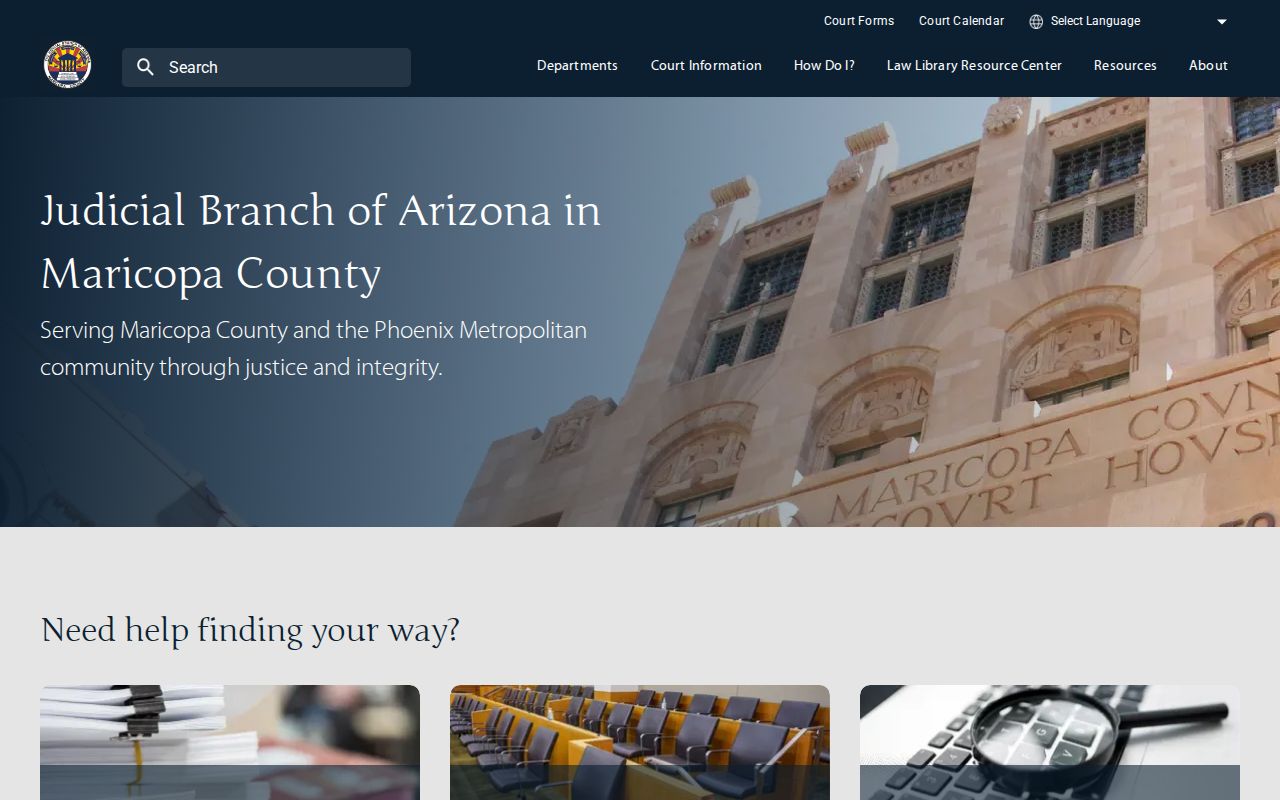
Sort out that court level first, then type the name. Doing it in that order keeps a felony, probate, or large civil case out of a city portal. It also keeps a municipal citation off the Superior Court docket search path.
- Identify the Superior, Justice, or Municipal Court that received the case.
- Choose the matching case category and enter the full case number, or use the party-name fields.
- Compare the filing year, case type, party role, status, and assigned judicial officer.
- Read the newest docket and minute entries, then check the separate calendar for a future setting.
- Use eAccess or contact the proper clerk when the actual filed document or a certified copy is needed.
Note: The local docket goes offline Tuesday through Saturday from 3 to 4 a.m. Audit changes can also continue for 24 hours.
Inside the Maricopa Docket Portal
The official Maricopa docket landing page splits its results into case information, minute entries, and court calendars. The split matters. Case information is the running index of the case. A minute entry is a brief written judicial record that may explain a ruling, a reset, or a reassignment. The calendar tells you when and where a setting is scheduled. It can shift. And it never lists every judicial act.
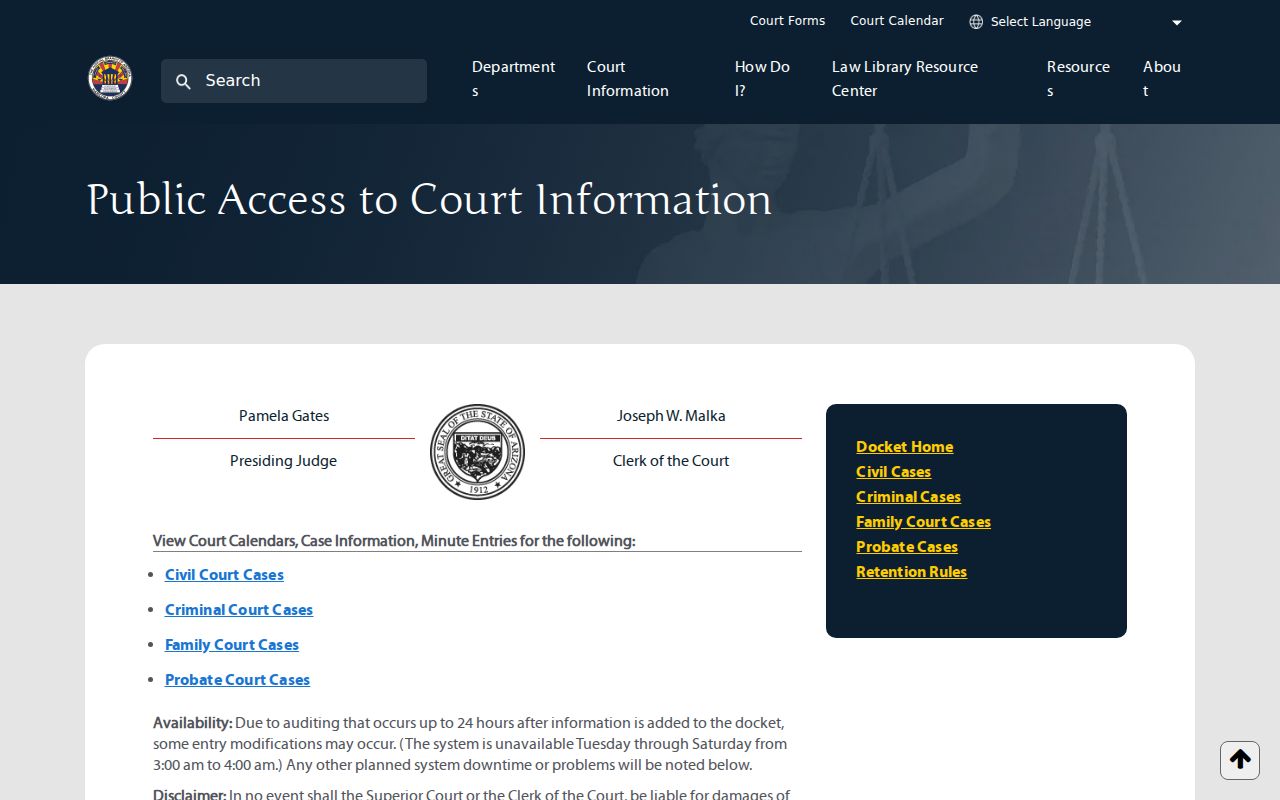
One search path is often not enough. Docket history costs nothing. Filed images are not part of it. An eligible civil or criminal document may sit in eAccess instead. Older, certified, or missing material goes to the clerk. The Clerk of the Superior Court in Maricopa County holds it. And remember the audit window: a fresh Maricopa filing can still change after first view.
Court Dockets: What They Show
A Maricopa County court docket is a timeline, not the whole file. It usually names the case, the parties, counsel, the judge or commissioner, the filings, minute entries, settings, and the disposition. Criminal dockets may add public charge and bond events. Civil dockets trace the complaint, service, answers, motions, rulings, judgment, and post-judgment work, while restricted personal data and sealed content stay filtered out.
Prefixes point you to the right path. Superior Court forms you will see include CR-2026-sequence for criminal, CV-2026-sequence for civil, FC-2026-sequence for family, and PB-2026-sequence for probate. Copy the punctuation straight from the record. Guessing it invites errors.
| Case number | Category prefix, filing year, and unique sequence used to route the search. |
|---|---|
| Parties and counsel | Public role labels, names, and attorney information allowed for remote display. |
| Docket entries | Dated labels for filings, notices, orders, and other case events. |
| Minute entries | Judicial directions or accounts that often explain a terse event label. |
| Court settings | Date, time, building, room, division, and hearing mode when published. |
| Disposition | The current outcome for the case or for each charge, subject to later events. |
Three Layers of Maricopa Records
People say "court record" and mean three different things. The free docket is the index and case history. A filed document is the complaint, motion, minute entry, signed order, or judgment behind one line of that index. A certified copy comes from the proper clerk with official certification attached. A portal printout helps you find the right item. A government website address alone does not make it official.
| Layer | Best channel | What it provides |
|---|---|---|
| Case history | Local Docket | Free entries, status, parties, minute entries, and settings. |
| Filed image | Arizona eAccess | Eligible open Superior Court civil and criminal documents filed from July 1, 2010. |
| Official copy | Clerk request | Plain or certified documents, older files, and records absent online. |
The Superior Court resources directory brings several official paths together.
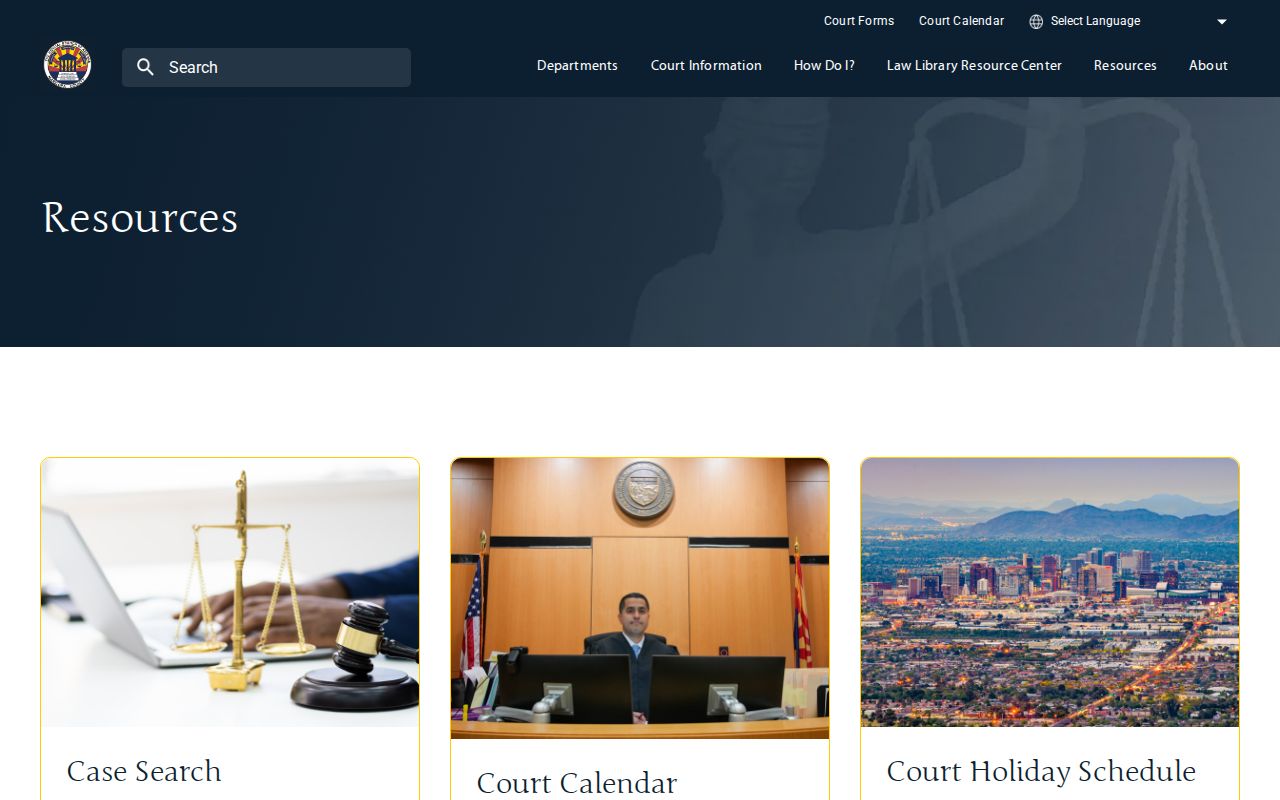
Use those links by what they do. eFileAZ and AZTurboCourt accept filings in the categories shown on the state availability matrix, so they are filing tools rather than public docket searches. Maricopa also runs local filing paths for criminal and juvenile delinquency matters. Behind it all, iCIS serves as the court's case-management system.
Maricopa County Courts and Their Dockets
Arizona runs one Superior Court organized by county. Maricopa County dockets still split across court levels. Superior Court holds general jurisdiction. It covers felonies, major civil matters, family, probate, juvenile, mental-health, and tax work. Then come the 26 Maricopa County Justice Courts. They keep their own limited civil, small-claims, eviction, traffic, misdemeanor, and protective-order files. Municipal Courts, for their part, hold city ordinance, misdemeanor, parking, and most city-police citation records. For precinct matters, the Maricopa County Justice Courts directory is the official starting point.
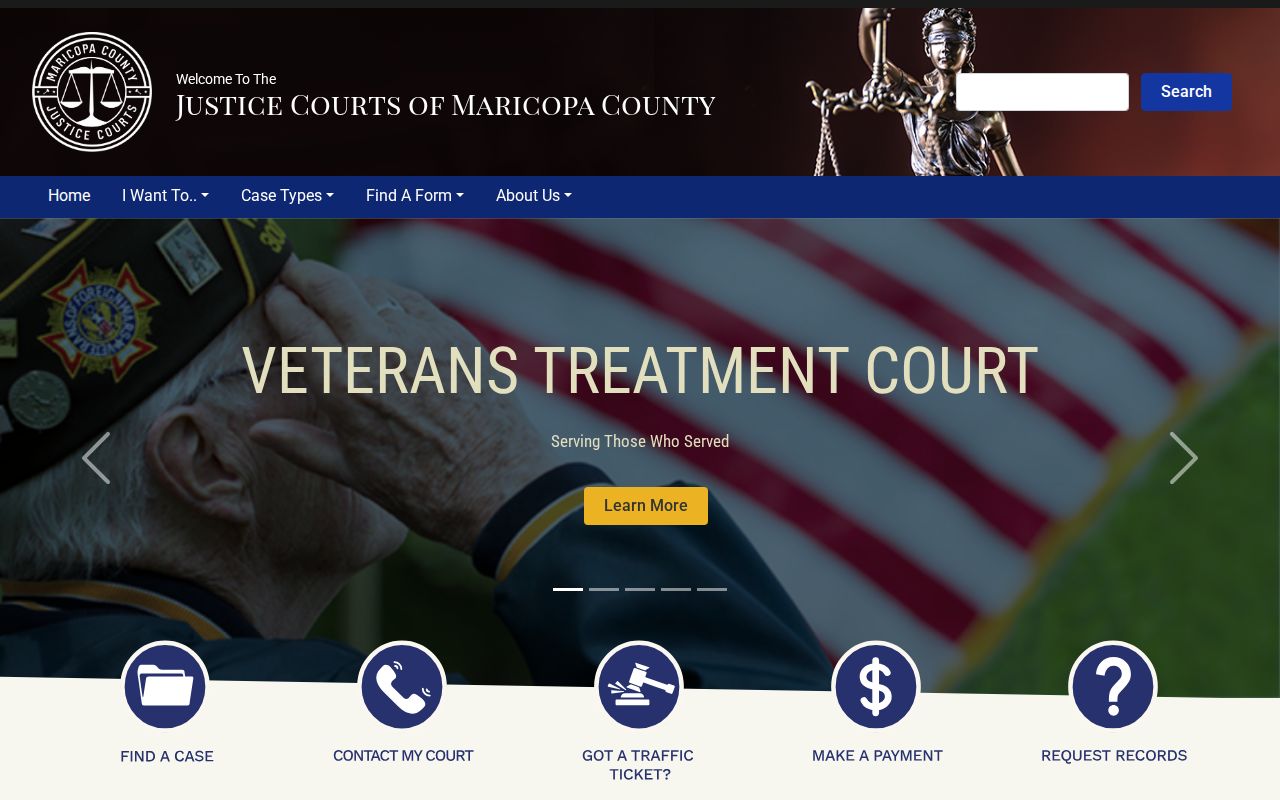
Justice Court files do not fold into the Superior Court docket. An appeal from a lower court does create Superior Court events. The original file, though, stays with the Justice or Municipal Court that heard the matter.
| Court | Docket covers | Where to search |
|---|---|---|
| Superior Court of Arizona in Maricopa County | Felony, general civil, family, probate, juvenile, tax, and lower-court appeals | Local Docket, eAccess, or Clerk |
| Maricopa County Justice Courts | Precinct traffic, misdemeanor, eviction, small claims, limited civil, and protective orders | Named precinct court and statewide discovery |
| Municipal Courts | City traffic, parking, ordinance, and misdemeanor cases | City court portal or clerk |
Why Maricopa Docket Searches Miss Courts
The Arizona Judicial Branch Public Access system can surface cases across participating courts, but it is no complete county index. Most Arizona courts take part, not all. Data updates weekly. Expect exclusions too: sealed cases, orders of protection, mental-health and probate matters, victim and witness data, juvenile delinquency matters, and local-ordinance charges.
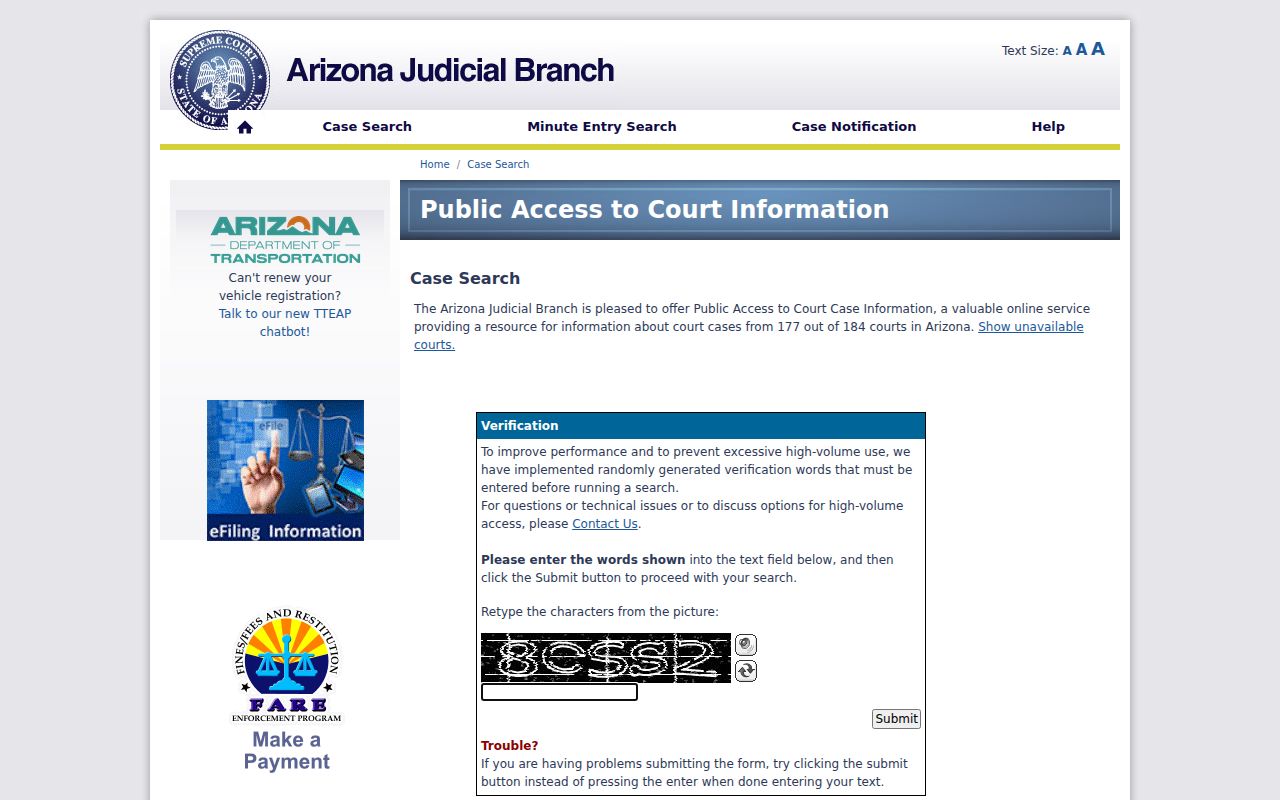
A blank statewide result is a routing problem, not proof the record is gone. Check the Maricopa local docket for Superior Court first. Then check the named Justice or Municipal Court. Confirm the case prefix, the filing year, and the spelling. A known case still will not appear? The clerk's office can say whether that category is restricted from remote display. Treat Public Access as unofficial. Verify any current setting against the local docket or the court division itself.
Court Dates and Settings in Maricopa County
Maricopa gives you two calendar tools. The date-range search takes a start date. It shows either one day or one week at a time. Today's Hearings works differently. It searches by case number or name and often lists the building, floor, room, local time, and hearing mode. It also refreshes through the day. One catch: initial appearances sit outside that tool on a separate daily schedule.
Always pair any court date with the newest minute entry. If a setting was continued, the old date stays in the case history until a later entry posts the new one. A vacated setting is simply canceled. Trust three sources in order. These are the latest signed order or minute entry, the live calendar, and a call to the assigned division. For building codes and what to do about a missed setting, see the detailed Maricopa County court schedule.
- Setting
- A scheduled court event, such as arraignment, status conference, oral argument, trial, or sentencing.
- Reset
- A moved hearing. The prior date remains visible while a newer entry controls.
- Vacated
- A canceled setting that should not be treated as an upcoming court date.
Maricopa Court Calendar Building Codes
A calendar row often starts with a building code before the floor and room. CCB is the Central Court Building. SCT is South Court Tower. ECB is East Court Building, OCH is the Old Courthouse, and SEF is the Southeast facility in Mesa. Where you appear depends on your assigned division, not on the county seat. Regional family and juvenile work makes that difference matter. The official Maricopa court locations page names each building and the departments inside it.
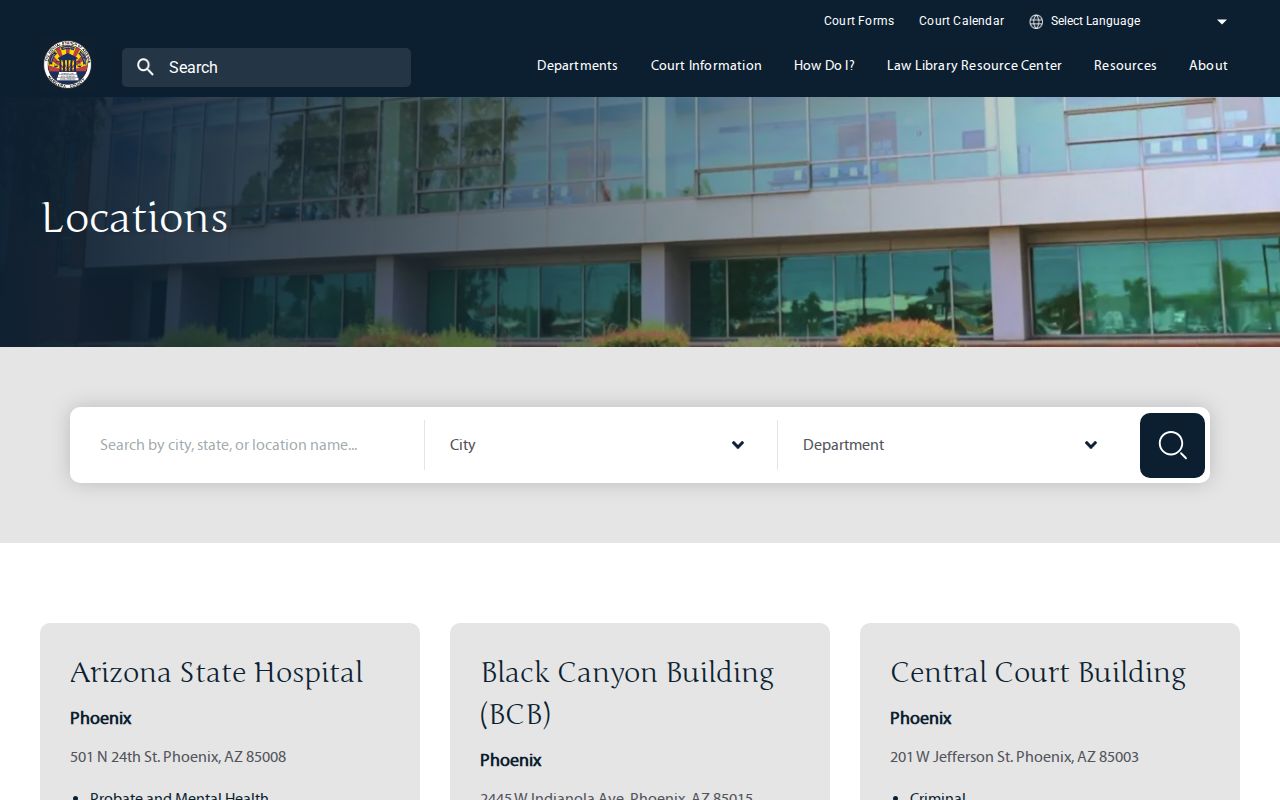
Decode the abbreviation before you travel. Then recheck the current calendar and confirm with the assigned officer. A public livestream icon lets you watch proceedings where that is authorized, but it is not the private CourtConnect link a party or lawyer uses; that comes from counsel or the division. If the docket shows no date, or the location clashes with a notice, call the division instead of guessing the courtroom.
Docket Access Under Arizona Law
Arizona treats court records mainly under judicial access rules, not the ordinary executive-agency public-records process. You can usually inspect open docket information without giving a noncommercial reason. Remote access may be narrower than what you can see at the courthouse. Reasonable copy charges still apply. For a filed-stamped or certified item, go to the court custodian.
Key Rules:
Arizona Supreme Court Rule 123 sets the main public-access standard for judicial records and allows lawful limits for confidentiality, privacy, and security.
ACJA § 1-604 governs remote electronic access, which may expose less than a courthouse terminal.
A.R.S. § 12-119.01 provides the process and effect for sealing eligible criminal case records.
A.R.S. § 8-208 limits access to juvenile court and related agency records.
ACJA provisions also cover bulk or compiled data and how personal identifiers are protected. A case-by-case request is one thing. A commercial data request is another, and it can require an agreement, a declaration, and added cost.
Restricted Maricopa Docket Entries
A restricted document does not always vanish from a Maricopa County court docket. State policy lets the public register show that a document was received or generated under a generic title. That applies when a full caption would expose confidential content. So the event stays visible. The image and its sensitive details stay closed. Sealed cases and protected categories may drop out of statewide Public Access entirely. Common limits include sealed records, juvenile delinquency, adoption, mental-health material, protection orders, victim and witness data, and protected identifiers.
If you know a case exists, confirm the court and case number first. Then ask that clerk whether the category is excluded online and what authority unlocks it. Sealing an eligible criminal record restricts public visibility under the court order. Internal judicial records are not necessarily destroyed.
Note: A generic docket label confirms procedural activity only. It does not authorize access to the filing behind it.
How the Clerk Keeps Docket Records
Joseph W. Malka is the Clerk of the Superior Court in Maricopa County. His office accepts filings, keeps the official Superior Court file, records docket activity, provides public access, and certifies copies. The court runs the calendar and hearing work. The Clerk holds the file itself. Justice Court and Municipal Court clerks keep their own limited-jurisdiction records.
Start with the free docket for history. eAccess is the next step for eligible images. Public-access computers at Clerk locations fill the gap when the web portal stops short. For a precise judgment, a certification, archive retrieval, or a missing document, a scoped online or counter request works best. Calling the Information Center helps you find the assigned division or the right service counter.
Clerk of the Superior Court
Central Court Building
201 W. Jefferson St., Phoenix, AZ 85003
602-506-3204
Older Maricopa Court Record Files
Arizona eAccess covers eligible open Superior Court civil and criminal documents. Coverage runs from July 1, 2010 forward. It does not hold every image or case type. Older paper, microfilm, or off-site records may still be public and retained, though the Clerk needs a focused request and reasonable retrieval time. Give the case number, the exact document title, and the filing date. Add your plain-or-certified choice to cut delay and copying costs.
| Item | Charge or access |
|---|---|
| Inspect online docket | Free case history; no filed images |
| Inspect at public computer | Free inspection; printing charges can apply |
| Plain Clerk copy | $0.50 per page |
| Certification | $35 per document, plus copy charge |
| eAccess image | Current price shown before purchase |
Transcripts and audio are a separate track. They come from the assigned judicial officer's court reporter, who sets the rate or estimate. A Clerk pleading copy is not the same as a reporter's record.
Maricopa Court Docket Scale
Maricopa is Arizona's population center. The Superior Court calls itself the largest in the state. Court-system material reports more than 200,000 annual Superior Court filings and 154 judicial officers. Phoenix Municipal Court, meanwhile, handles about 160,000 charges each year. Do not mix those measures. A filing is not a unique case, and a charge count is not a docket count. The Arizona court filings dashboard lets you select Maricopa County. Pick a fiscal year there instead of relying on an old total.
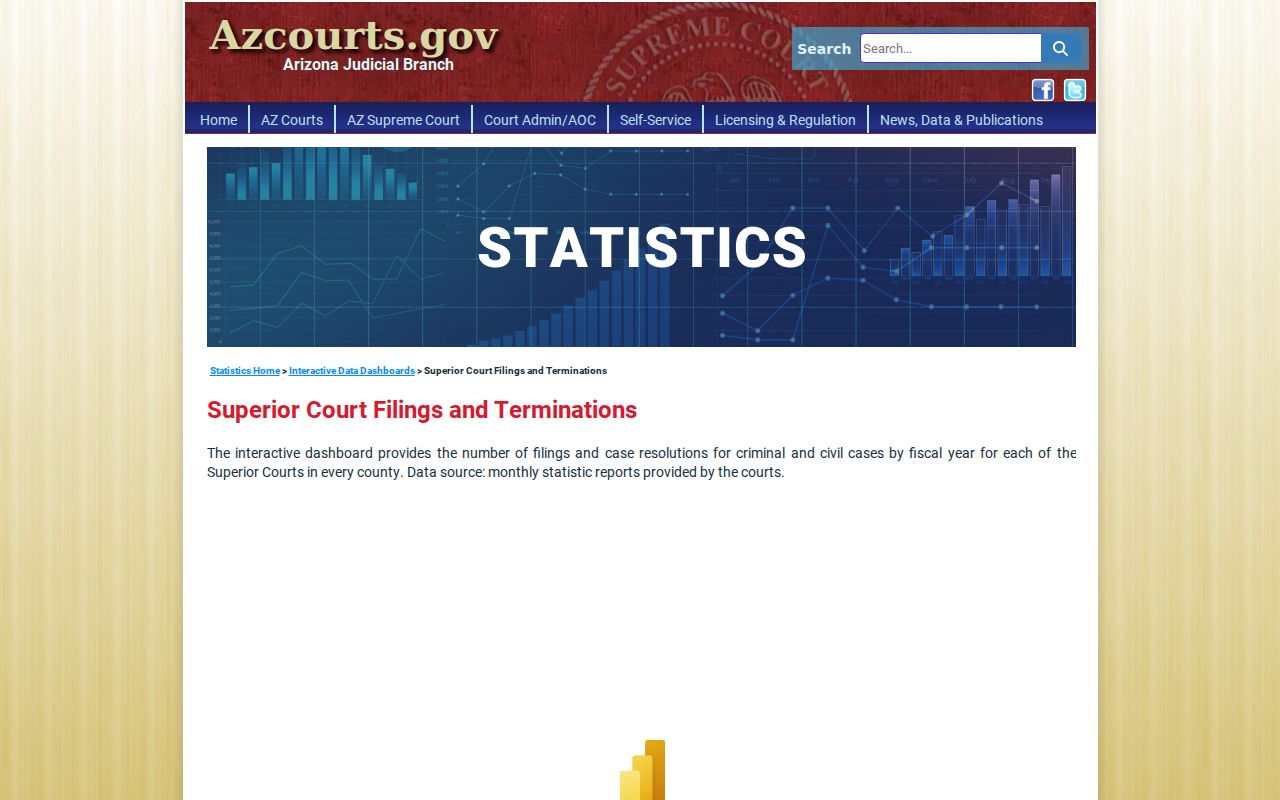
Use the dashboard view to keep filings separate from terminations across criminal, civil, family, juvenile, and probate. That split matters. It explains why workloads look different and why divisions rotate. When iCIS opens a new civil case, it gets a CV number. The calendar comes through automated rotation. Any later reassignment shows up in minute or docket entries. So trust the current judicial assignment over an old judge name.
City-by-City Court Dockets in Maricopa County
Each of Maricopa County's five largest incorporated places, ranked by the 2020 Census, has its own municipal docket path. These courts take city traffic, parking, ordinance, and misdemeanor matters. Their tools differ sharply. Phoenix offers an obligation search. Mesa runs eCourt plus a separate calendar. Chandler's public case tool covers disposed cases only. Gilbert routes through statewide access and direct records requests, and Glendale keeps city-code matters with its City Court. A city record stays separate from any Justice Court precinct file and from any Superior Court case. Check the court printed on the citation or notice first.
Phoenix Court Records
1,608,139 · Municipal traffic, parking, code, and misdemeanor matters.
Mesa Court Records
504,258 · eCourt ticket, date, payment, and disposition tools.
Chandler Court Records
275,987 · Disposed-case search plus separate date and payment channels.
Gilbert Court Records
267,918 · Municipal case access and direct Rule 123 record requests.
Glendale Court Records
248,325 · City Court traffic, misdemeanor, and ordinance records.
Map and Directions to the Maricopa County Central Court Building
The Clerk of the Superior Court's official case file, along with Criminal and Family Court functions, is based at the Central Court Building in the downtown Phoenix court campus, and its Information Center fields docket questions from that address. Other Superior Court divisions sit in neighboring buildings on the same multi-building campus: South Court Tower (175 W. Madison St.) for Criminal Court and jury activity, East Court Building (101 W. Jefferson St.) for Civil and Probate/Mental Health, and the historic Old Courthouse (125 W. Washington St.) for Probate/Mental Health and public information. Because the online calendar lists a hearing's building only by abbreviation (CCB, SCT, ECB, OCH), readers should translate the code and confirm the floor and room before traveling.
Clerk of the Superior Court
Central Court Building
201 W. Jefferson St., Phoenix, AZ 85003
602-506-3204
Visitors should plan for courthouse security screening at entry, and downtown Phoenix parking is generally in paid city or county garages and lots, with Valley Metro light rail also serving the government campus. Disability accommodations run through the court's ADA program, and interpreter needs should be arranged with the assigned judicial division in advance. Because a case's assigned building and courtroom can change, confirming the current room and floor on the online calendar or with the Information Center before traveling is worth the extra step.